On portfolio diversification
Diversification: How useful is it really?
By mak ·
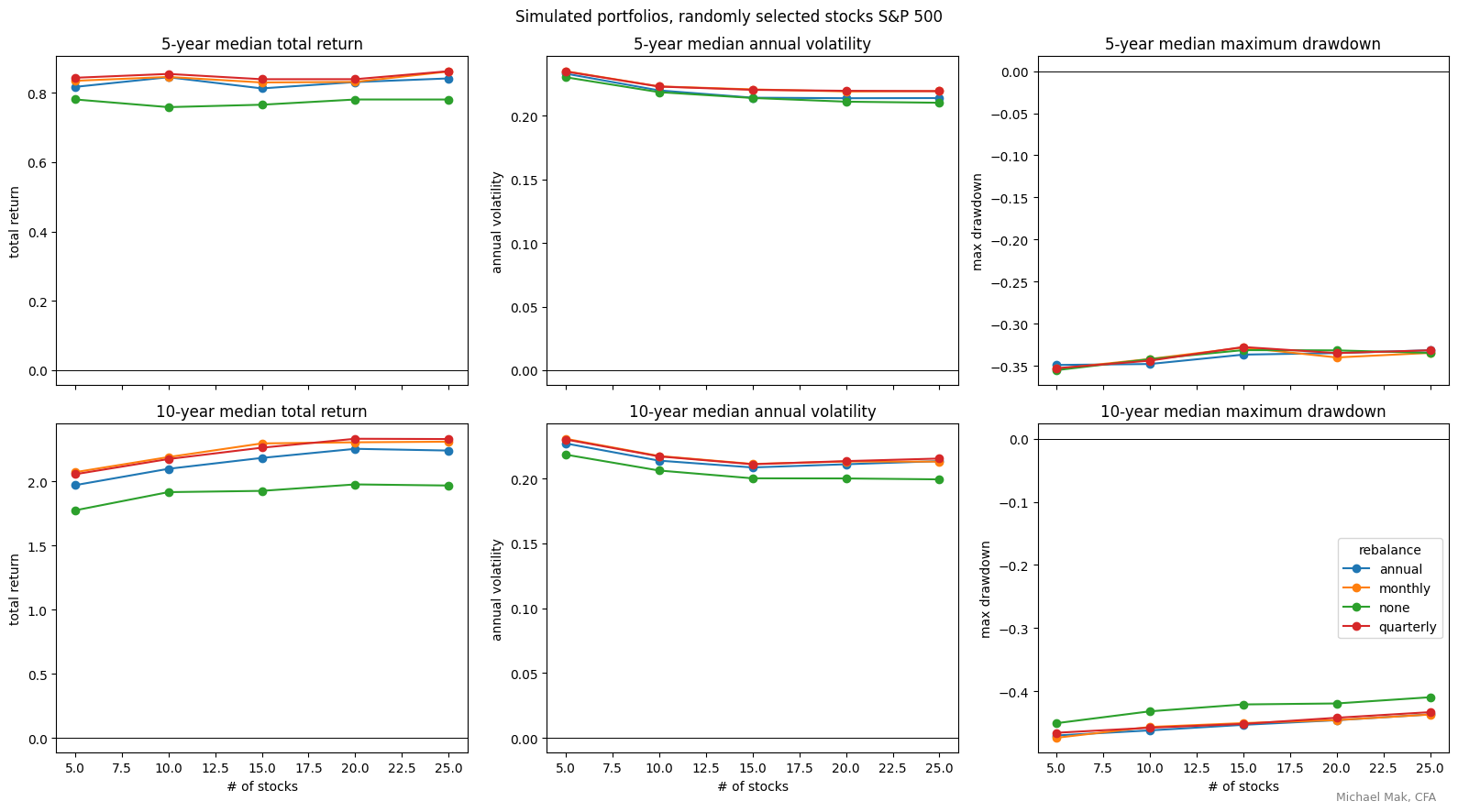
I ran 20,000 equal-weight S&P 500 portfolio simulations across 100 randomly selected historical windows since 2005:
- 50 five-year periods and 50 ten-year periods
- portfolios of 5, 10, 15, 20, and 25 randomly selected stocks so even monkeys can benefit
- Buy-and-hold, plus monthly, quarterly, and annual rebalancing
- Point-in-time S&P 500 membership
What we can see: marginal returns for diversification are quick and diminishing.
A few takeaways:
1. Going from 5 stocks to 10–15 stocks did most of the diversification work. Volatility fell meaningfully; gains beyond that were smaller.
2. Rebalancing generally improved median returns. In the 10-year sample, 25 stocks returned 207.3% without rebalancing versus 239.6% with quarterly rebalancing.
3. Rebalancing was not a risk-reduction button. It often came with slightly higher volatility and deeper drawdowns than simply letting winners run.
 These Monte Carlo simulation paths goes beyond to see beyond the median. While diversification immediately reduces median annual volatility, we can observe that the 5 stock portfolios are much more “bottom heavy”, while the they share similar 90th percentile paths. so - even if you want to bet big and hope to win a lot, chances are focusing on 5 winners is not going to improve your chances that much better. This is especially true if you like to rebalance your stocks every once in a while.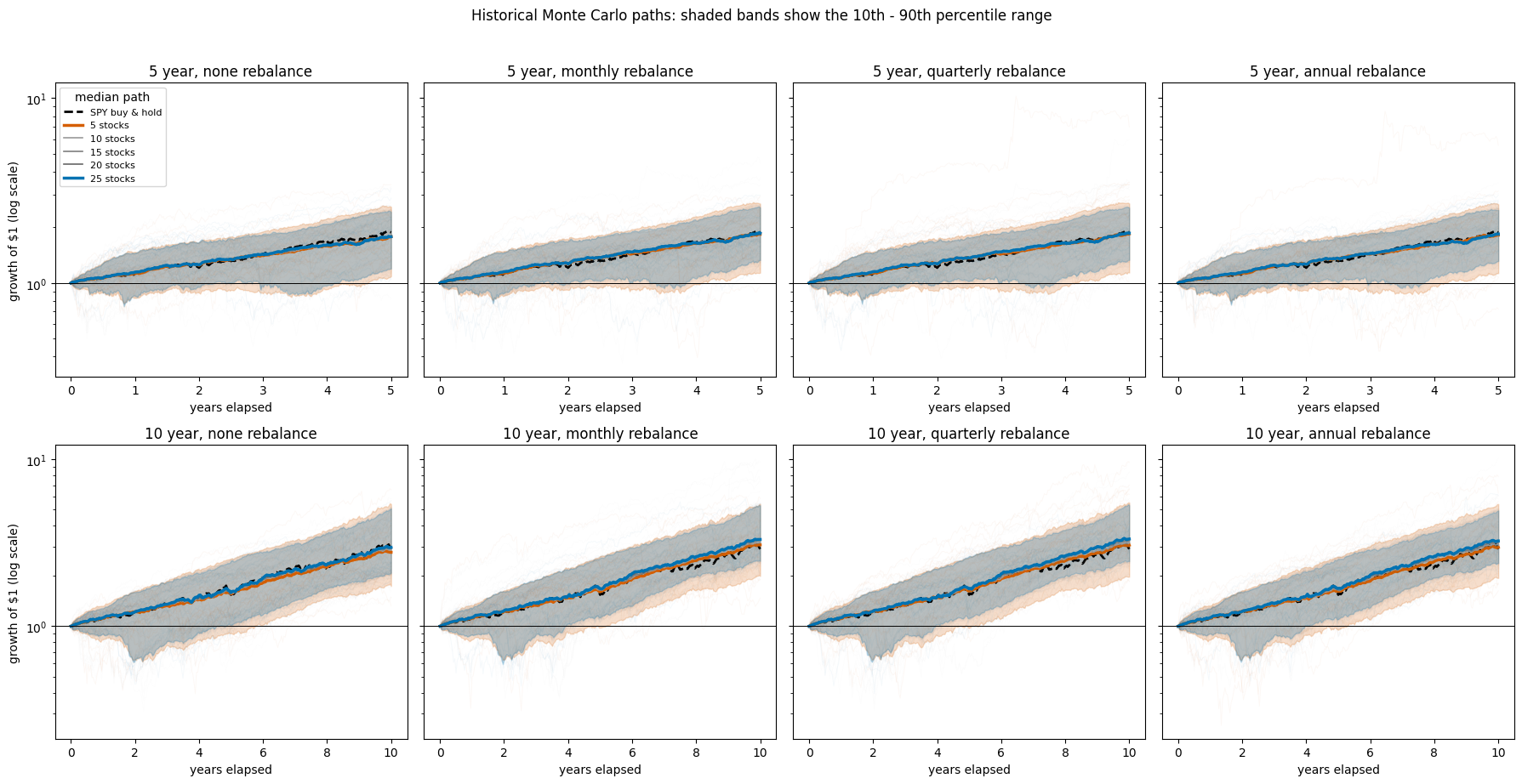
This is why I try to limit my individual stock exposure to somewhere between 10-20 stocks at a time. Not only does it optimize on the idiosyncratic risk/return trade off, it also helps with mental capacity of keeping track of so many investment theses at once.
One caveat though: to truly benefit from diversifcation, your basket of individual stocks must be relatively different. If you’re holding 10 stocks and 5 of them are energy producers, expect higher annual volatility than a basket of less correlated stocks.