Currency risk as a Canadian
If you're a Canadian who is exposed to US equities, you're exposed to two different bets. The first is the American companies themselves. The other is currency risk, something Canadian investors may not be considering.
By mak ·
So what does this risk look like in practice?
I went back and pulled every S&P 500 drawdown greater than 15% in the past 50 years and compared the peak to troughs denominated in USD and again in CAD (Chart 1).
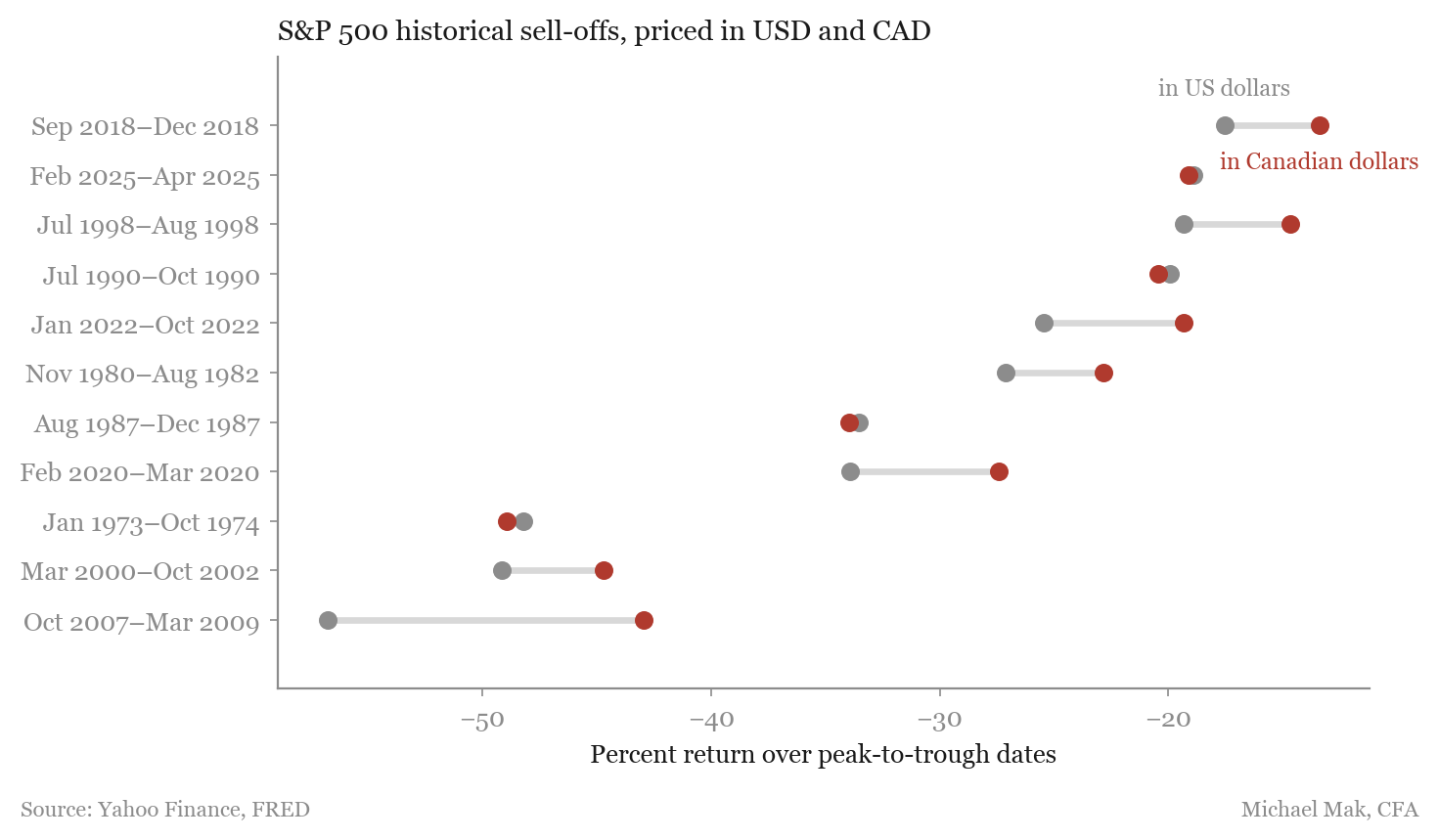 Chart 1: S&P 500 historical sell offs - USD vs CAD
The Canadian lost much less in 7 of the 11 cases. In the other 4 cases, the difference was almost negligible. The worst gap was during the Great Financial Crisis, at over 13%. That is not a rounding error in a retirement account.
Why does this happen? For one, this shows that the USDCAD is generally negatively correlated to US equity performance (Chart 2). When stocks go down, so does the CAD, especially during volatile times.
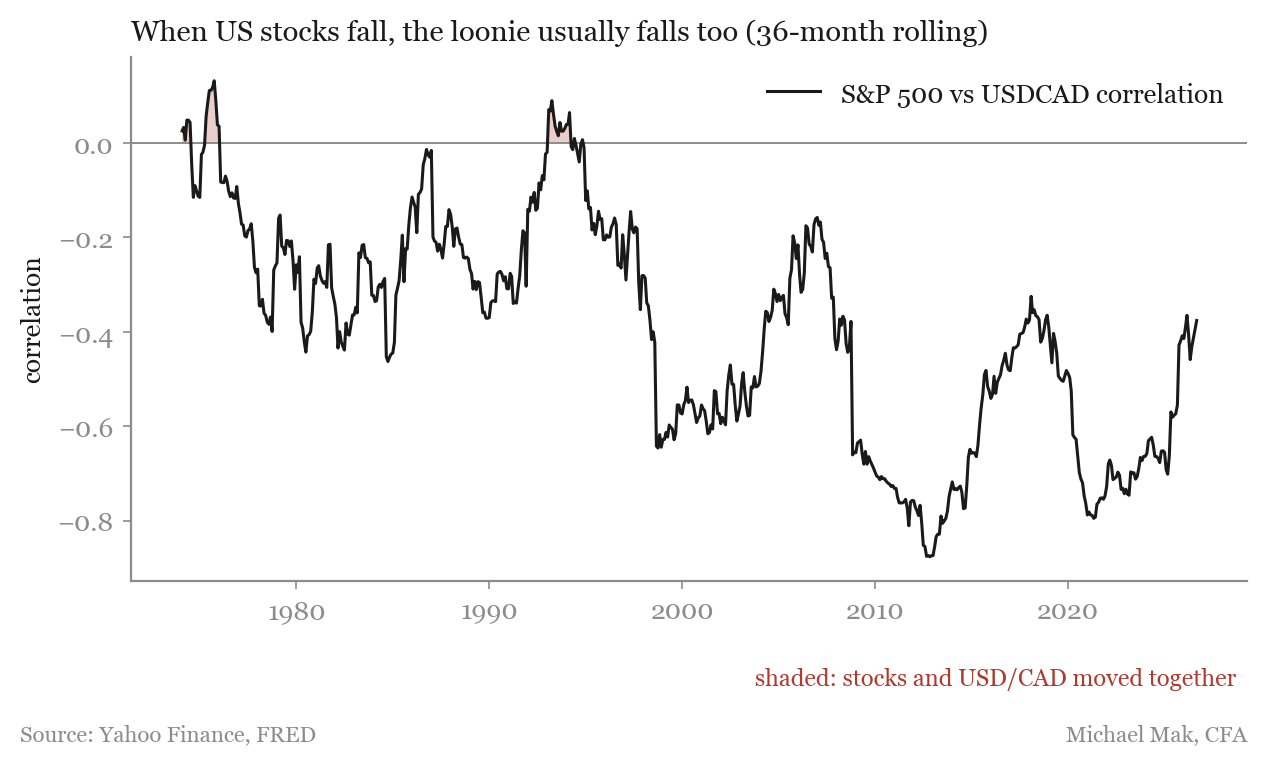 Chart 2: Rolling correlation, S&P 500, USDCAD pair
Economically this also makes sense: The loonie is an energy exporter’s currency in a small open economy bordering one of the largest in the world. When growth expectations fall, oil/energy prices fall, and markets go risk-off, the first destination is to the US dollar.
A Canadian holding US equities without a currency hedge takes the immediate loss on prices, but gets paid back a little from the US dollar rally.
None of this is a rule of course. Chart 2 shows the relationship is persistent, but not constant. It flipped in the mid 70s and the mid 90s.
The hedge also isn’t free, especially right now. Hedging US dollars back into CAD means selling the dollar forward. With rates where they are right now - US at 3.75-4% vs the BoC 2.25%, you end up receiving fewer loonies later than at spot.
All of this also assumes that you’re spending Canadian dollars. If you plan to retire somewhere else that is USD denominated or has their currency pegged to the USD, a unhedged postion becomes a match instead of a bet.
These are the two questions you should be asking if you want to know whether you should hedge your currency exposure. Where are you spending this money? And when do you need to spend it? This phenomenon is typically longer horizon, like with anything in equities, it’s much more likely to revert once you hold for long enough.
All of this spells out why I like to hold my own US equities unhedged.